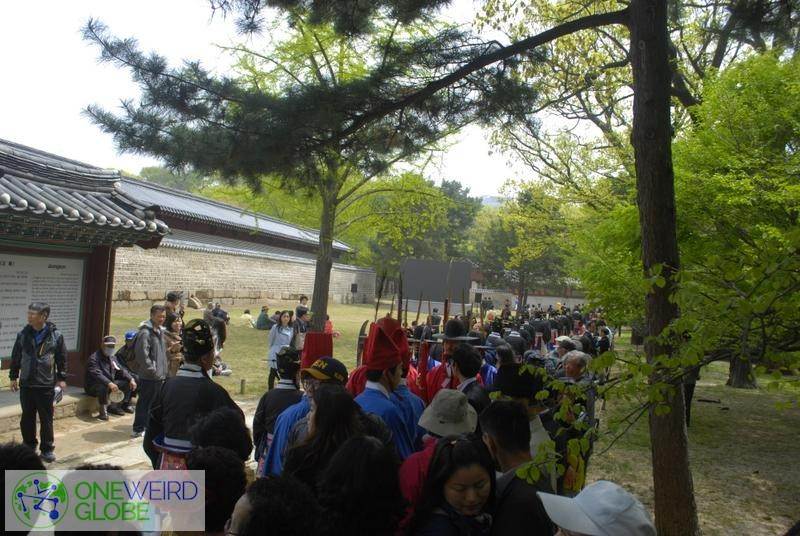
Held on the first Sunday of May, the annual Jongmyo Daeje (종묘대제) is an intriguing glimpse into the solemn ceremonies for the spirit world. It seems a mite out of place in this ultra-modern country, but if the US can have Civil War reenactments, Korea can have their annual ceremonies.
While I had done some reading on the ceremony ahead of time, a brochure picked up on-site offered the basics to the 12 steps of the ceremony. A larger 50-page booklet offered everything from congratulatory messages to the names and pictures of the musical instruments to come. A trilingual 30,000 won book was also available, which went into even more detail.
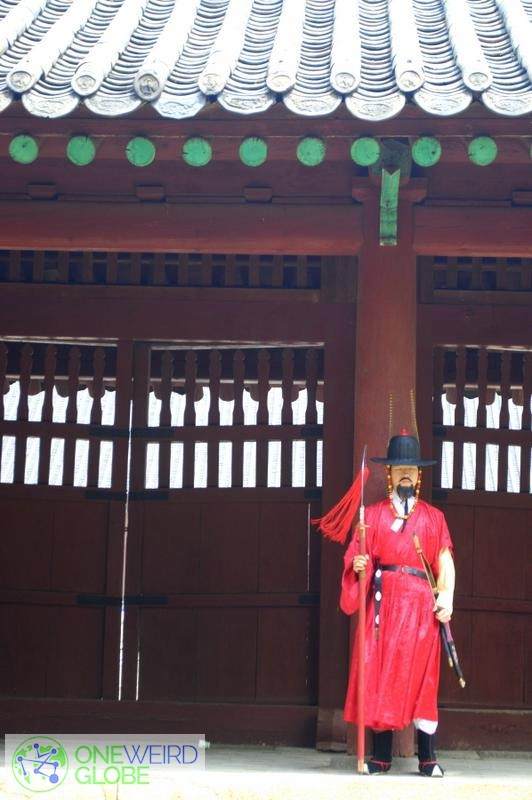
While the crowd waited outside the South Gate (cropped out of picture), security guards of both the modern and traditional type kept watch over the crowd. This wasn’t exactly a ceremony for the crowd, however — despite the modern touches and accouterments, there was almost no interaction with the masses.

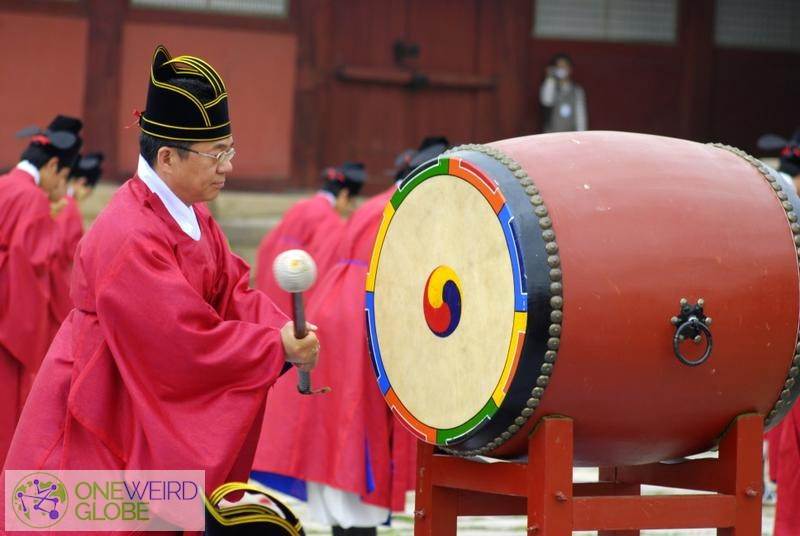
The Daechuk — an officiant in charge of reading ritual prayers — Over a dozen other officiants had specific roles — the Choheongwan, who offers the first glass of wine, the Sajun, who pours wine into the cup, and the Gwansewi, who helps wash hands.
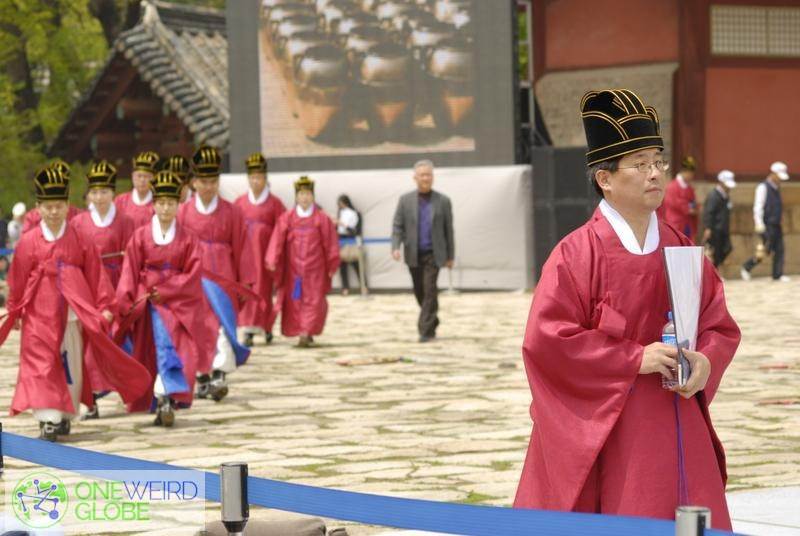
The musicians file in, taking their seats in one of several places on Jongmyo’s large stone pavilion:
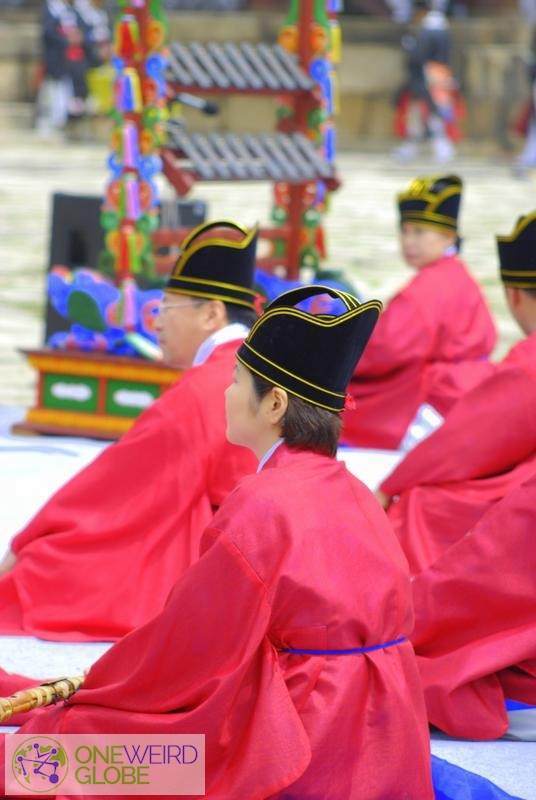
Instrumentalists and dancers both had their performances in-between prayers offered to the spirits. Although the large screens to either side offered a nice view and some English, everything else was in Korean.
Considering it only comes around once a year, there was plenty of media on hand.
A solemn ceremonial dance — one of several different dances.
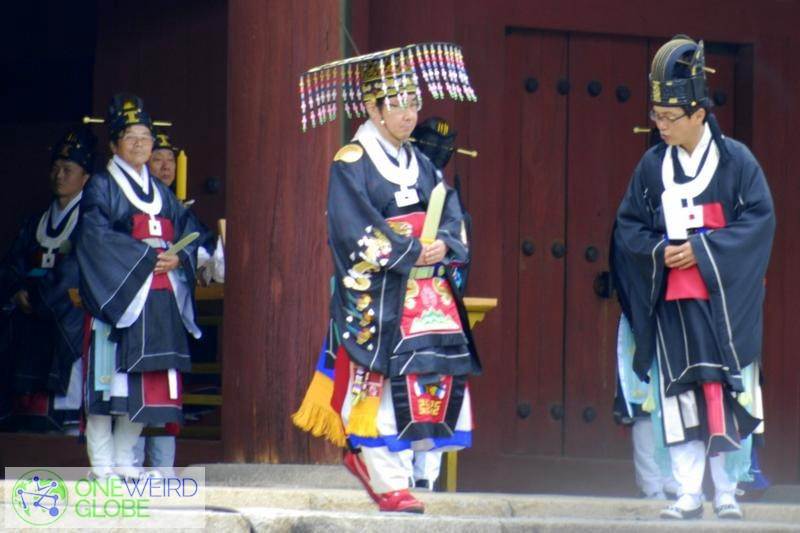
The mortarboard-like coronet, which according to my book had 12 strings with jade beads of seven different colors.
While extremely elaborate and detailed, I couldn’t tell you it was fun. At just under five pages long, the procedural list of who gives what to whom and when makes a Western wedding look like an elementary school play. If you’re a big fan of traditional Korean culture and have read enough to truly appreciate the details, this would be a lot more interesting. Jongmyo itself is a wonderful experience — calm, quiet, and peaceful — but the annual ceremony probably won’t be your cup of tea.
If this is your thing, however, come early and be prepared to find a spot to stay for awhile.